- Provide global users with the design, manufacturing, supply, and installation of steel towers and structures.

-
Weifang ,Shandong,P.R.C
-
-
smart cell tower
Self-Supporting Towers


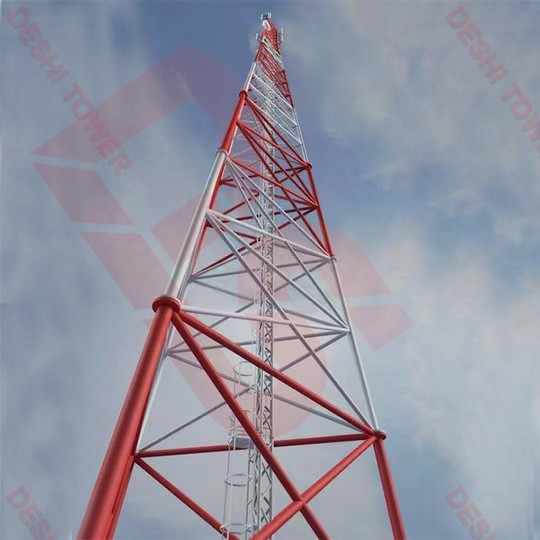


A smart cell tower, often referred to as a next-generation or advanced cell tower, incorporates modern technologies to enhance connectivity, efficiency, and integration with other networks and services. These towers are part of the broader evolution towards smart cities and the Internet of Things (IoT). Here are some key features and technologies associated with smart cell towers:
1. Advanced Antenna Technology
- Massive MIMO (Multiple Input Multiple Output): Smart towers often use Massive MIMO technology which significantly increases the capacity and efficiency of networks by using multiple antennas to send and receive more data simultaneously.
- Beamforming: This technology improves signal power and reduces interference, directing the signal beam toward the user rather than dispersing it broadly.
2. 5G Technology
- Smart cell towers are crucial for the rollout of 5G networks, which require a denser network of cell sites due to the higher frequency bands with shorter range. These towers are equipped to handle higher throughput and lower latency communications.
3. Energy Efficiency
- Smart towers incorporate renewable energy sources such as solar panels and wind turbines. They also use energy-efficient technologies to reduce power consumption and operational costs.
4. Integrated IoT Support
- These towers are designed to support a vast array of IoT devices, facilitating data collection and transmission across various services like traffic management, public safety, and environmental monitoring.
5. Enhanced Security Features
- With the increase in data throughput and connectivity, smart cell towers include advanced security protocols to protect against cyber threats and ensure data privacy.
6. Remote Monitoring and Management
- Equipped with sensors and advanced management systems, smart towers can be monitored and controlled remotely, allowing for real-time adjustments, predictive maintenance, and troubleshooting.
7. Backhaul Integration
- Smart towers are equipped with high-capacity backhaul connections, often fiber optic, to handle the increased data load and ensure reliable connectivity.
8. Edge Computing Capabilities
- Some smart towers are equipped with edge computing resources to process data closer to the end-user, reducing latency and bandwidth use by handling data processing locally rather than sending it back to a central data center.
9. Adaptive Design
- Smart cell towers are designed to be modular and scalable, allowing for easy upgrades as technology advances and demand grows.
10. Community and Environmental Integration
- These towers are often designed to blend into their surroundings to minimize visual impact and are built with materials and designs that consider environmental and community impact.
Smart cell towers represent a significant advancement in telecommunications infrastructure, playing a pivotal role in enabling faster, more reliable wireless communication, supporting the burgeoning demand for mobile data, and facilitating the seamless operation of smart city technologies. As we move further into the era of digital transformation, the role of smart cell towers will continue to expand and evolve.
| Product | smart cell tower |
| Shape | lattice |
| Material | Normally Q345B/A572, Minimum Yield Strength ≥ 345 N/mm² Q235B/A36, Minimum Yield Strength ≥ 235 N/mm². OR Q420 Q460 ASTM A572 GR65, GR50, SS400 |
| Surface treatment | Hot dip galvanized Following ASTM A 123, BS729 or as client required. |
| connection | bolt connection |
| Standard | ISO 9001:2008 |
| Height: | 20 ft, 25 ft, 30 ft, 40 ft, 50 ft, 60 ft, 70 ft, 75 ft, 80 ft, 100 ft, 200 ft, 500 ft, 600 ft, etc. |
| Surface treatment: | galvanization and color painted |
| Welding Standard | AWS (American Welding Society ) D 1.1 |
| Production Process | Raw material test → Cutting →Welding →Hole drilling →Dimension verify →sample assemble → surface clean→ Galvanization or powder coating ,painting →Recalibration →Packages |
| Packages | Packing with plastic paper, steel box or according to client’s request. |
Deshi Tower specializes in the design, manufacture, and construction support of transmission towers, Telecommunications Tower, steel structures, and observation towers.
Transmission tower design adheres to ASCE/SEI standards. Telecommunications Tower design follows ANSI/TIA-222 standards. We are not just manufacturers and suppliers, but also your technical support and partners.

If you need professional product quotations, technical & construction support, please email to us or submit the following sheet, we will contact you in 24 hours and pls check your emailbox. Your connection information will just be known by ourselves.