- Provide global users with the design, manufacturing, supply, and installation of steel towers and structures.

-
Weifang ,Shandong,P.R.C
-
-
4g cell tower
Self-Supporting Towers
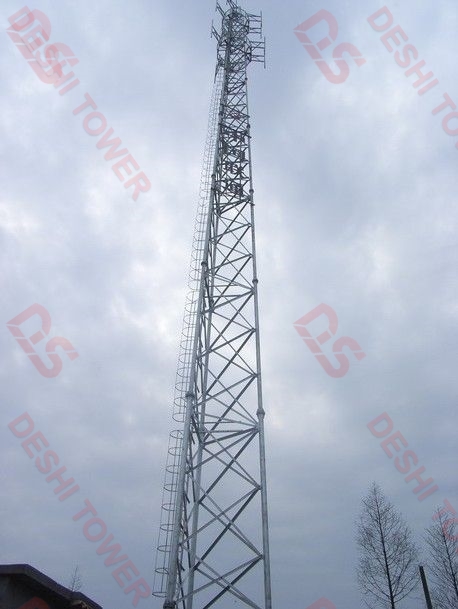

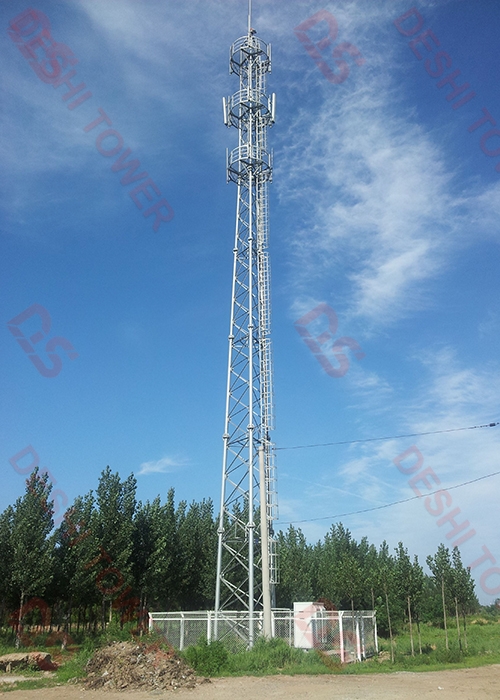

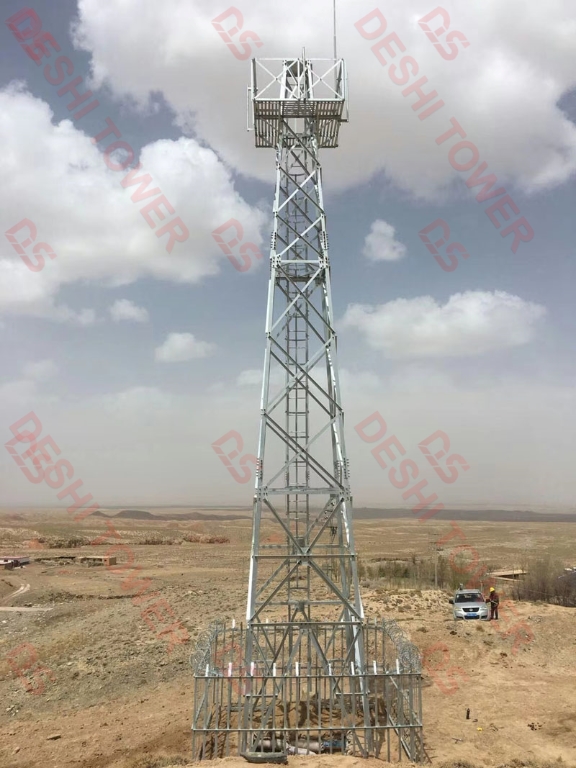

A 4G cell tower, also known as a 4G base station or cell site, forms the backbone of 4G LTE (Long Term Evolution) networks, providing wireless communication services to mobile devices over long distances. Here are the key features and characteristics of 4G cell towers:
Key Features and Characteristics:
- LTE Technology:4G cell towers operate on LTE technology, which offers faster data speeds, lower latency, and improved spectral efficiency compared to earlier 3G networks.
- Frequency Bands:4G networks use various frequency bands, typically including both lower frequency bands (such as 700 MHz and 850 MHz) for wider coverage and higher frequency bands (like 1800 MHz and 2100 MHz) for increased capacity and faster data rates.
- Antenna Configuration:These towers are equipped with multiple antennas to support Multiple Input Multiple Output (MIMO) technology. MIMO enhances data throughput by transmitting multiple data streams simultaneously and improving network efficiency.
- Backhaul Connectivity:They are connected to the core network via fiber optic cables or microwave links for backhaul, which ensures the flow of data between the tower and the network’s central infrastructure.
- Coverage Area:Each cell tower covers a geographical area known as a cell. The size of the cell varies based on factors such as terrain, frequency band used, and population density.
- Deployment Density:In urban areas with high population density and data demand, 4G cell towers are often densely deployed to provide adequate coverage and capacity. In rural areas, towers are spaced farther apart due to lower population density and less demand.
Deployment and Applications:
- Urban and Suburban Areas:4G cell towers are prominently deployed in urban and suburban areas to cater to large populations and high data traffic. They provide reliable voice and data services for mobile users, supporting applications like video streaming, online gaming, and social media.
- Rural Areas:In rural regions, 4G towers provide essential connectivity over larger distances, although coverage may be more limited compared to urban settings due to the need for wider cell coverage areas.
- Enterprise and Industrial Applications:These towers support private networks for businesses, industries, and public safety agencies, enabling applications such as remote monitoring, fleet management, and critical communications.
Challenges:
- Interference and Capacity:High data demand in urban areas can lead to network congestion and reduced speeds during peak times, requiring ongoing optimization and capacity expansion.
- Spectrum Availability:Spectrum allocation and availability impact the performance and capacity of 4G networks. Operators must manage spectrum efficiently to meet growing data demands.
- Technological Evolution:As mobile data usage continues to rise, the transition to 5G networks poses challenges and opportunities for upgrading existing 4G infrastructure while ensuring backward compatibility and seamless user experience.
Summary:
4G cell towers are fundamental to delivering high-speed mobile broadband services across varied landscapes and population densities. They leverage LTE technology and advanced antenna systems to provide reliable connectivity for a wide range of applications, from consumer mobile services to critical enterprise communications. As the telecommunications landscape evolves, 4G networks remain integral while paving the way for the next generation of wireless technology.
| Product | 4g cell tower |
| Shape | lattice |
| Material | Normally Q345B/A572, Minimum Yield Strength ≥ 345 N/mm² Q235B/A36, Minimum Yield Strength ≥ 235 N/mm². OR Q420 Q460 ASTM A572 GR65, GR50, SS400 |
| Surface treatment | Hot dip galvanized Following ASTM A 123, BS729 or as client required. |
| connection | bolt connection |
| Standard | ISO 9001:2008 |
| Height: | below 300 meters |
| Surface treatment: | galvanization and color painted |
| Welding Standard | AWS (American Welding Society ) D 1.1 |
| Production Process | Raw material test → Cutting →Welding →Hole drilling →Dimension verify →sample assemble → surface clean→ Galvanization or powder coating ,painting →Recalibration →Packages |
| Packages | Packing with plastic paper, steel box or according to client’s request. |
Deshi Tower specializes in the design, manufacture, and construction support of transmission towers, Telecommunications Tower, steel structures, and observation towers.
Transmission tower design adheres to ASCE/SEI standards. Telecommunications Tower design follows ANSI/TIA-222 standards. We are not just manufacturers and suppliers, but also your technical support and partners.

If you need professional product quotations, technical & construction support, please email to us or submit the following sheet, we will contact you in 24 hours and pls check your emailbox. Your connection information will just be known by ourselves.